Casino rules
blackjack rules
The rules of blackjack, explained simply
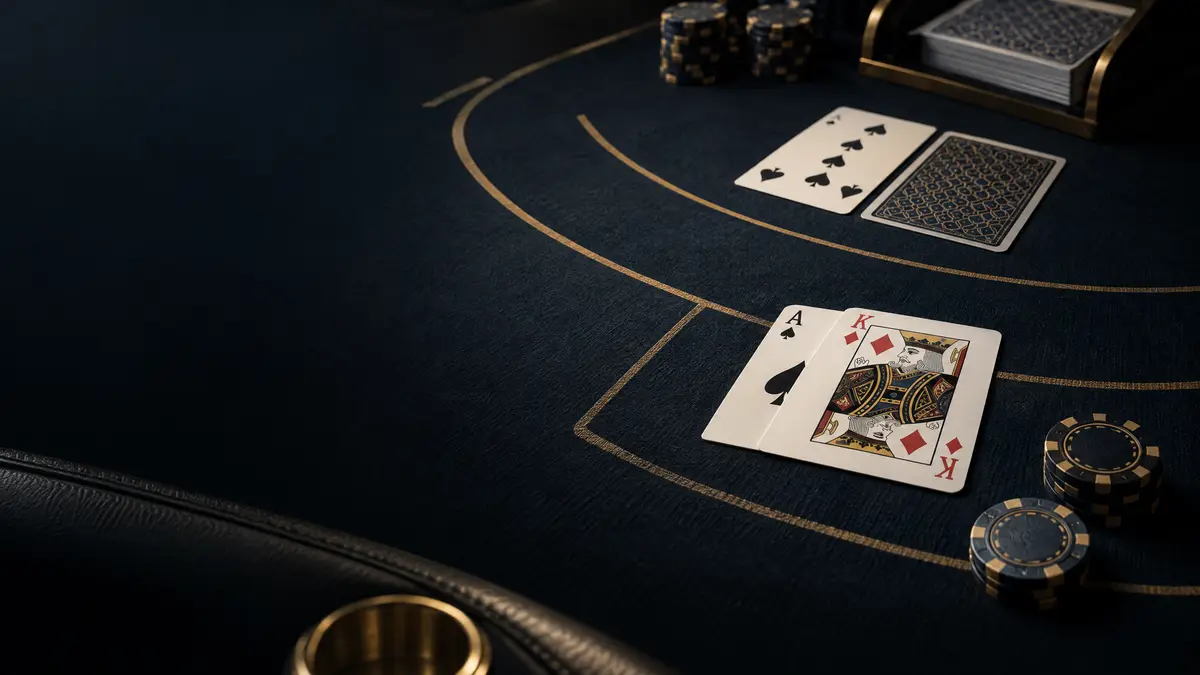
The aim of blackjack is to beat the dealer's hand without going over 21. You and the dealer are each dealt cards; number cards are worth their face value, picture cards (J, Q, K) are worth 10, and an ace is worth 1 or 11 — whichever helps your hand. Get closer to 21 than the dealer without busting (going over 21) and you win.
A "blackjack" is an ace plus any 10-value card on your first two cards — the strongest hand, usually paying 3:2. Below we cover card values, the dealer's fixed rules and your options. New to the game? See our plain-English guide to how to play blackjack.
Card values
Only the numbers matter in blackjack, not the suits. 2–10 are worth their printed value, Jack, Queen and King are each worth 10, and an ace counts as 1 or 11. A hand that uses an ace as 11 is called a "soft" hand (for example, ace + 6 = soft 17), because you can't bust by drawing another card — the ace can drop to 1.
How you win
You win if your hand is closer to 21 than the dealer's, or if the dealer busts. You lose immediately if you bust (go over 21), even if the dealer later busts too. An equal total is a "push" — your stake is returned. A two-card 21 (blackjack) beats a three-or-more-card 21.
Blackjack is a game against the dealer only — other players at the table don't affect whether you win. If you want the fewest-mistakes approach afterwards, read our blackjack strategy guide.
The dealer's rules
The dealer has no choices — they follow a fixed rule: keep drawing (hit) until reaching at least 17, then stop (stand). At most tables the dealer stands on all 17s; at some, the dealer hits on a "soft 17" (a 17 that includes an ace counted as 11). Because the dealer must play this way, you can always see one dealer card (the "upcard") and plan around it.
Your options
On your turn you can hit (take another card), stand (keep your total), double down (double your bet and take exactly one more card), or split (if your first two cards are a pair, separate them into two hands with a second equal bet). Some tables also offer surrender (forfeit half your bet to end the hand). These choices are the whole skill of the game.
How a hand of blackjack is played, step by step
- Place your bet Put your chips in the betting box before the deal.
- Cards are dealt You get two cards face up; the dealer gets one card up and one down.
- Check for blackjack An ace plus a 10-value card is blackjack and usually pays 3:2 straight away.
- Make your choices Hit, stand, double or split based on your total and the dealer's upcard.
- Dealer plays The dealer reveals the hidden card and draws to at least 17.
- Compare hands Closest to 21 without busting wins; an equal total is a push.
Frequently asked questions
What beats what in blackjack?
Getting closer to 21 than the dealer wins; a two-card 21 (blackjack) is the best hand and beats any other 21. If you bust (go over 21) you lose immediately, and an equal total with the dealer is a push (stake returned).
Is an ace 1 or 11 in blackjack?
Both — an ace counts as 11 unless that would bust your hand, in which case it counts as 1. A hand using an ace as 11 is called 'soft'.
Does the dealer have to hit or stand?
The dealer has no choice: they draw until reaching at least 17, then stand. Some tables have the dealer hit on a soft 17 (a 17 that includes an ace counted as 11).